

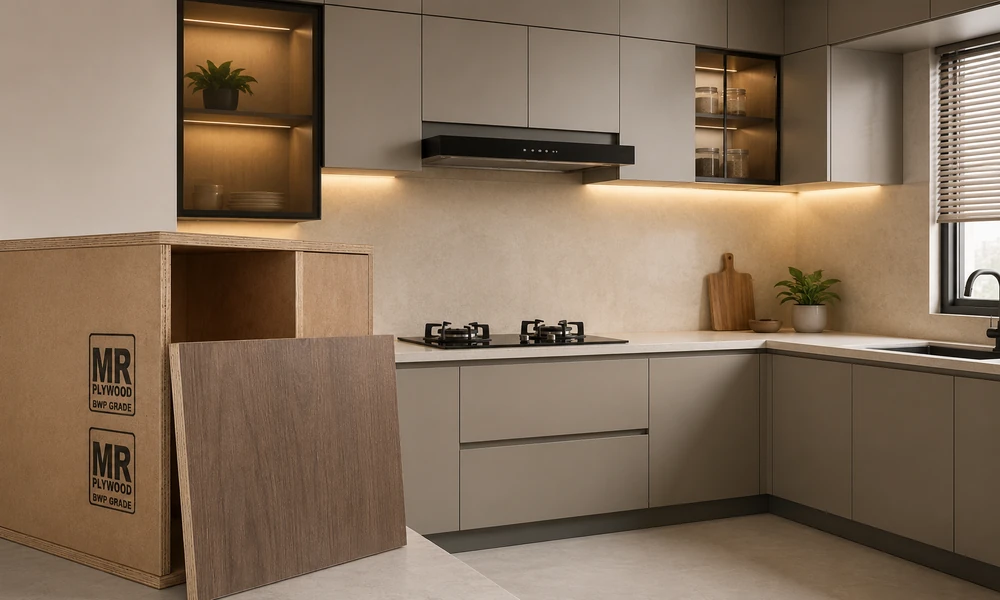
Cabinets in the kitchen will encounter the challenges of daily use, humidity, heat, spills, and sporadic contact with water. Because of these factors, choosing appropriately good plywood is essential to ensure the cabinets remain strong and appealing for a longer time. MR plywood, or moisture-resistant plywood, is suitable for some kitchen cabinets; however, whether it is sufficient depends on the cabinet location and level of moisture it is expected to experience, as well as the quality of workmanship and installation.
Understanding MR Plywood
MR plywood is able to resist moisture better than standard interior-grade plywood. It has been created specifically for areas with humidity and sporadic moisture. It is commonly used when creating indoor furniture.
Nonetheless, it is important to keep in mind that MR plywood cannot be viewed as plywood that is waterproof. Continuous exposure to water, standing moisture, and other wet conditions might be the reason why a higher-quality product should be opted for.
Where MR Plywood Can Be Used
MR plywood can be used for cabinets installed away from direct sources of water. For instance, wall cabinets, pantry units, and other dry places are unlikely to need additional moisture resistance.
If the kitchen has good ventilation and spills are cleaned quickly enough, MR plywood manufactured appropriately can be a good option for the cabinets. However, check the grade and product characteristics before making a decision.
Areas That Require Additional Protection
Not every area of the kitchen experiences similar conditions. The cabinets situated beneath the sinks and the units installed near the plumbing pipes,s along with other areas prone to frequent splashing, are exposed to higher moisture risks.
In these situations, buyers may need to think about using water-resistant plywood or specialised plywood with greater moisture resistance according to the given situation. The choice should depend on the moisture exposure experienced and not on the usage of a single plywood type for the whole kitchen.
Core Construction Matters
The quality of plywood depends not only on the moisture rating of the plywood but also on the inner construction. Good core construction with bonded veneer sheets offers better strength, stability, and holding ability.
Before buying it, one should check the edges of the plywood piece for such issues as big voids, unattached layers, or visible separation. Good quality core construction should affect the process of cutting, drilling, assembling, and putting hinge, knobs, and drawer mechanisms.
Edge Sealing Matters
Even MR plywood can suffer from dampness when it is exposed at the same edges and cut parts. During the manufacturing of cabinets, the area around the sink holes, joints, screw holes, as well as cut edges should be properly protected.
Since the quality of installation is vital for proper operation of kitchen cabinets over time, it is very important to carry out edge sealing properly.
Consider the Installation Location
The choice of the best plywood type depends on the place of installation of the cabinet. Upper cabinets usually endure less exposure to water than cabinets fixed under the sinks or in other wet places. Like pantry cabinets and some dry storage systems, slots close to dishwashers, sinks, or anywhere moisture can potentially enter may present different needs. So, checking all spaces ensures nothing’s missed, whether it be under-specifying or unnecessary material spending.
Check Thickness and Quality
Choosing the thickness of plywood should depend on cabinet construction, size, weight, and hardware to be used. For example, a shelf made to carry heavy pots will have different conditions than a simple cabinet panel.
Check the sheet for permeability, thickness consistency, surface defects, lack of warping, and bond quality. All of these will influence the manufacturing process as well as the end result of the kitchen.
Consider Long-Term Requirements
The cost of material shouldn’t be the sole deciding factor during the selection of plywood. The price of the project increases drastically when panels need replacing or swollen cabinets have to be repaired.
Companies like Royale Touche provide different options of plywood depending on the area of use, which allows purchasers to weigh specifications accordingly.
MR vs Higher Moisture Resistance
MR plywood might be enough for the cabinets in the kitchen with limited moisture exposure, and the installation area well protected. Yet, kitchens prone to water contact, poor ventilation, or high exposure might rather consider plywood with high moisture resistance.
One should choose the right plywood grade depending on all the factors mentioned rather than on the price directly.
Conclusion
MR plywood might be suitable for many kitchen cabinets, especially in places prone to low water contact. However, it shouldn’t be perceived as absolutely waterproof. In addition, cabinets socially near sinks, plumbing, and any other wet area might require plywood of high moisture resistance.
